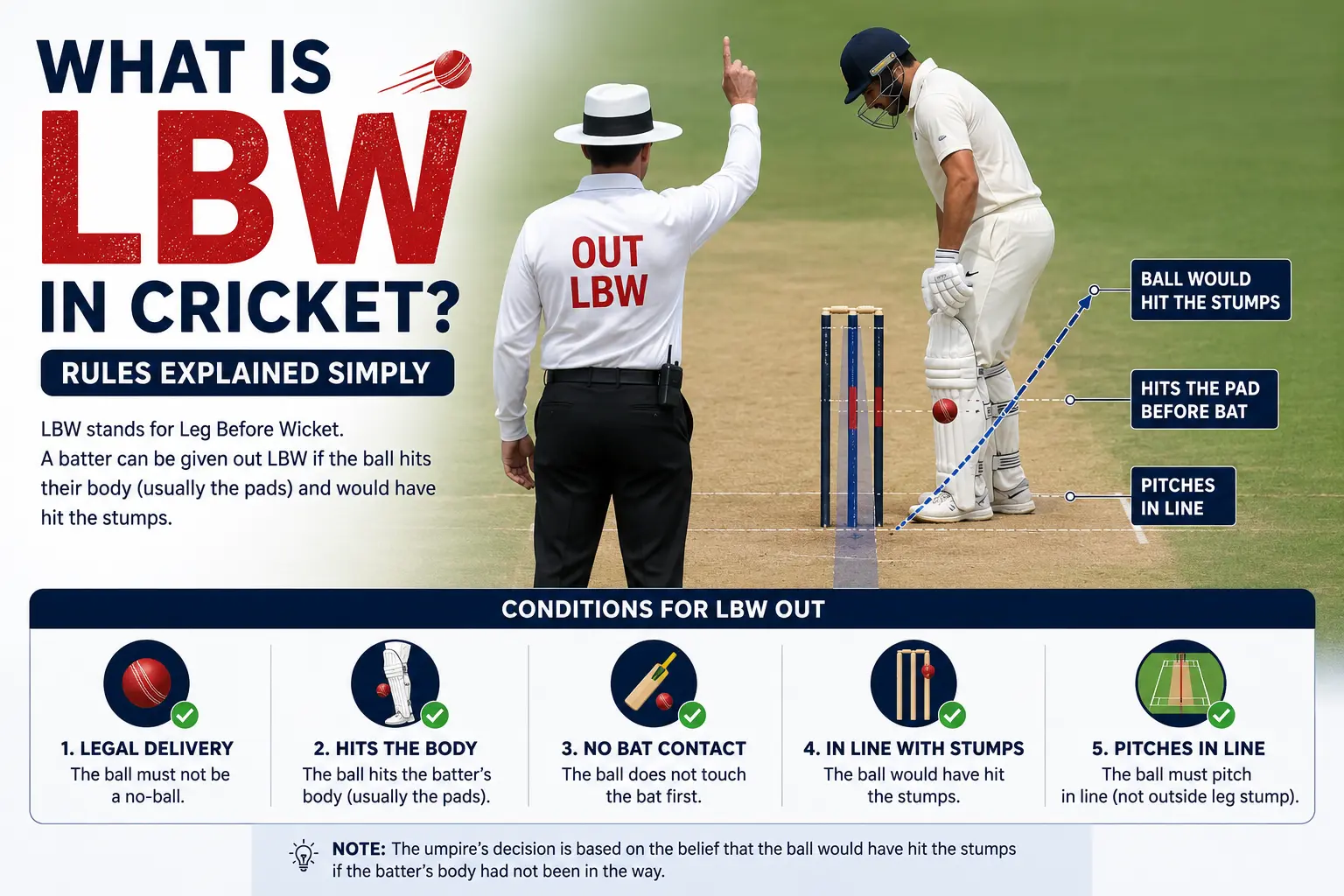
Cricket has several rules that can be confusing for beginners, and one of the most discussed among them is the LBW rule. If you have ever wondered what LBW means in cricket and how it works, this guide explains everything in simple language.
Understanding the LBW rule can help players and fans enjoy the game even more. Although the decision may sometimes seem complicated, the basic concept is easy to understand.
What Does LBW Mean in Cricket?
LBW stands for Leg Before Wicket.
It is a method of dismissal where a batter can be given out if their body blocks the ball from hitting the stumps.
The LBW rule prevents batters from using their legs or body to stop the ball instead of playing it with the bat.
Why Was the LBW Rule Introduced?
The LBW law was introduced to ensure fairness in cricket.
Without this rule, batters could simply use their pads to stop the ball and avoid getting bowled. The rule encourages players to use their bat and play proper cricket shots.
How Does the LBW Rule Work?
For a batter to be given out LBW, several conditions must be satisfied.
The Ball Must Be Legal
The delivery must not be a no-ball.
If the bowler oversteps the crease and bowls a no-ball, the batter cannot be dismissed LBW.
The Ball Must Hit the Batter’s Body
The ball usually strikes the pads, but it can also hit any part of the batter’s body.
The Ball Must Not Touch the Bat First
If the ball touches the bat before hitting the pad, the batter cannot be out LBW.
This is why players often review decisions using DRS technology.
The Ball Must Pitch in a Valid Area
The ball must not pitch outside the leg stump.
If it pitches outside leg stump, the batter is automatically not out.
The Ball Must Be Going on to Hit the Stumps
The umpire must believe that the ball would have hit the stumps if the batter’s body had not blocked it.
This is one of the most important parts of the LBW rule.
When Can a Batter Be Given Out LBW?
A batter can be given out LBW when:
- The ball is legal.
- It hits the pad before the bat.
- The ball does not pitch outside leg stump.
- The ball would have gone on to hit the stumps.
- The batter blocks the ball with their body.
If all these conditions are satisfied, the umpire can raise the finger and declare the batter out.
When Is a Batter Not Out LBW?
There are several situations where a batter cannot be dismissed LBW.
The Ball Hits the Bat First
Any contact with the bat before the pad means the batter is not out.
The Ball Pitches Outside Leg Stump
This is one of the most common reasons why appeals are rejected.
The Ball Is Missing the Stumps
If ball-tracking technology shows that the delivery would have missed the wickets, the batter remains not out.
The Delivery Is a No-Ball
No-balls cannot result in an LBW dismissal.
What Is DRS in LBW Decisions?
Modern cricket uses the Decision Review System (DRS) to assist umpires.
DRS uses ball-tracking technology to determine:
- Where the ball pitched.
- Whether it hit the bat first.
- Whether the ball would have struck the stumps.
This technology has improved the accuracy of LBW decisions in international cricket.
Can a Batter Be Out LBW While Playing a Shot?
Yes.
A batter can still be out LBW even while attempting a shot.
However, if the ball hits the batter outside the line of off stump while playing a genuine shot, they are generally not given out unless the ball is hitting the stumps directly.
Can a Batter Be Out LBW Without Offering a Shot?
Yes.
If a batter chooses not to play a shot and the ball satisfies all LBW conditions, the umpire can declare them out.
This is why batters are encouraged to play the ball whenever possible.
Famous LBW Dismissals in Cricket
Many legendary batters have been dismissed LBW during important matches.
Because LBW decisions often involve fine margins, they are among the most debated moments in cricket.
With the introduction of DRS, controversial decisions have reduced significantly.
Frequently Asked Questions
What is the full form of LBW?
LBW stands for Leg Before Wicket.
Can a batter be out LBW if the ball hits the bat first?
No. If the ball touches the bat before hitting the pad, the batter cannot be given out LBW.
Can a batter be out LBW on a no-ball?
No. A batter cannot be dismissed LBW on a no-ball.
Why can’t a batter be out if the ball pitches outside leg stump?
According to cricket laws, deliveries pitching outside leg stump cannot result in an LBW dismissal.
Does DRS help in LBW decisions?
Yes. DRS uses ball-tracking technology to determine whether the ball would have hit the stumps.
Final Thoughts
Understanding what LBW means in cricket is essential for every fan and player. Although the rule may appear complicated at first, it becomes much easier once you know the conditions required for a batter to be given out.
The LBW law is one of cricket’s most important rules because it ensures fairness between batters and bowlers. Thanks to technologies like DRS, LBW decisions have become more accurate and transparent in modern cricket.